



Get the new Great British Sewing Bee book worth £30 when you subscribe to Simply Sewing magazine
Meet Bella Mae, a costume crafter who fell in love with film fashion and now devotes her career to reinventing these iconic looks

At the end of a busy day, the gentle hum of the sewing machine and the intricacies of a pattern can calm the mind. Firsthand experience of working an office job while raising two young kids taught me this as I retreated to the relaxation of my sewing room most evenings.
I had an inkling that it wasn’t just me finding peace in stitching because whenever I ran sewing socials, workshops or retreats through my business IzzoSew Studio, a sense of productive restfulness would descend on the room as attendees homed in on their projects. To find out more, I sent a survey to my mailing list, and when I asked 180 of them “do you find sewing relaxing?”, 100% of participants responded “yes.”
Arts therapies have been found to alleviate anxiety, depression and stress while increasing resilience and wellbeing.
Despite what the Sewing Bee might indicate – with fabric flying and needles snapping in a frantic fury to finish a garment – sewing clearly has the potential to be a very soothing activity. And not just temporarily, but in a real life-changing way. In 2017, the Arts Council published research into the connection between the arts, health and wellbeing and found that: “Arts therapies have been found to alleviate anxiety, depression and stress while increasing resilience and wellbeing.”
This is certainly the case for Heidi Keeling, a sewist living with metastatic breast cancer and host of podcast Laugh Before Death. “When I was diagnosed with cancer it obviously turned my life upside down,” explains Heidi, who turned to sewing to occupy the hours she had previously spent working.
“I realised that I needed something to bridge that void of going from being a career person to – all of a sudden – being more of an ‘ill person’. Now, there is more to me than just being ill, I can also sew. And for someone who was always really busy and really active, I realised I couldn’t be physically active in the same way but I could at least busy my brain by thinking about patterns.

“I lose myself in sewing and it slows the brain down in a funny way. But it also gives me that sense of control – so even if the rest of the world is out of control, this bit I can control. I can redo it if it goes wrong, that’s not a problem.”
In response to the question “Why do you think sewing is good for your mental health?” well over half of survey respondents explained that sewing enabled them to silence anxieties, worries, problems and the stresses of life. Norfolk-based sewist Jacqueline Rose told us she finds sewing very mindful.
She added: “It may be the only occasion where I am concentrating on one thing and I can block out the overthinking and other brain noise.” She turned to sewing very purposefully during a difficult divorce, she says: “It gave me something to do with my time instead of fretting, and it got me out of the house to meet people (I work from home). Deciding to learn to sew has been one of the best decisions I have ever made.
“I didn’t think I would fall in love with it, or that I would necessarily make anything good enough to wear, but I was completely wrong. I buried my head in sewing garments which slowly got neater and more wearable.”

So, what is it about sewing that generates such a state of calm? The level of razor-sharp focus required to follow a pattern or correctly position a seam induces a sense of mindfulness.
On episode #115 of the Feel Better Live More podcast, meditation teacher, writer and journalist Dr Danny Penman says of mindfulness: “Everyone thinks of mindfulness as a form of meditation, well meditation is just one from of practicing mindfulness – being connected to whatever is going on around you.” Making requires total connection with the creation at hand, so instead of ruminating on a difficult day, the mind zeroes in on the fabric and the process.
Deciding to learn to sew has been one of the best decisions I have ever made.
Total absorption in an activity produces what psychologists refer to as “flow”. Sociologist and author of Languishing: How To Feel Alive Again in a World That Wears Us Down, Corey Keyes says on the Doing it Right podcast that flow activities make you feel “really engaged with what you are doing, so much so that you lose a sense of time, and the sense of feeling overjoyed and engaged is very high during flow activities”.
In his book, Corey explores various ways to ensure you are “flourishing” in life – as opposed to “languishing.” Sewing has the potential to hit several of his recommendations, including obvious things like the fact it is not passive but active leisure (generating
a flow state) and how learning a new skill can be extremely rewarding.
He also really emphasises how important a supportive community is to flourishing, and sewists often have access to this via sewing groups or socials where conversations about the selection of fabric can progress to more heartfelt discussions. Helping others is another of Corey’s suggestions, which is often the case for sewists who might be giving advice or sewing gifts for others.

Another tried and tested reducer of stress is escaping into nature. Danny says: “If you are feeling stressed, maybe you are sitting in your office and life is beginning to overwhelm you, and you need a break right now, just literally go outside. Look at the sky, look at the horizon, look down the street, just broaden your awareness. That is an incredibly simple thing to do, and it is very effective.”
It seems that the combination of micro and macro focus is very restorative, so selecting a sewing setting that is connected to nature in some way can further enhance any feelings of restfulness. A 2015 study by Human Spaces, an employee wellbeing consultancy group, found that by incorporating greenery into a work environment people report a 15% increase in wellbeing and creativity, and a 6% rise in productivity.
Heidi explains the advantages of arranging her sewing spot close to nature: “My sewing corner is in view of the garden, and it looks out over the fields. It is very comforting – if it is good weather and the sun comes in, it is very comfortable to sew, and if it is rainy outside, sewing makes the bad weather a bit more bearable.”
Inspired by my understanding of the calming potential of a breathtaking view, we recently relocated our city-based sewing retreats to the Lake District, Peak District and rural Portugal. The intention is to combine the peace found when focusing on the minutia of a sewing task and the relief found before the magnitude of the great outdoors.

On the second day of our first Lakes retreat, I took an early morning stroll along the shore of lake Ullswater. All was quiet but for the gentle movement of the water, and this moment staring out at the wonder of the natural world empowered me once I was immersed in the fine details of a sewing project.
It was a feeling that is hard to rival, but it is this pursuit of peace that keeps many of us returning to our sewing machines, no matter what the day might bring.
Photos of classes: Kirsten Photography

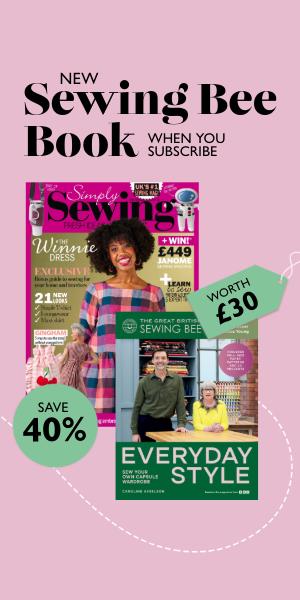
Never miss an issue! Sign up to receive your favourite magazine every month – delivered straight to your door.
Sign up today